
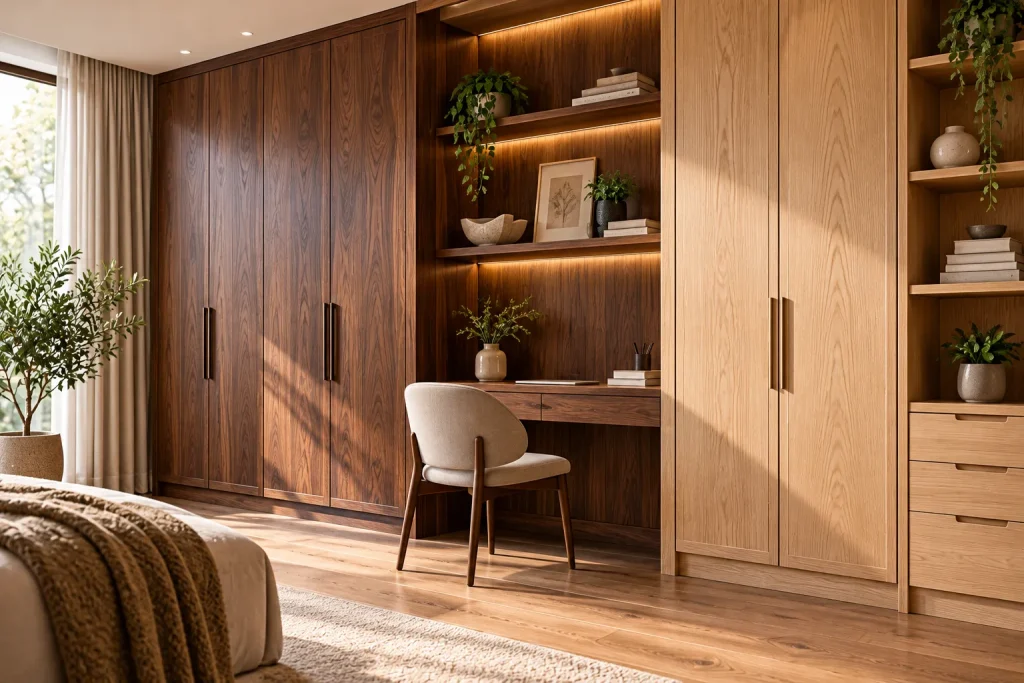
The wood you choose for your bespoke joinery can change the whole look of a room. Oak has a more noticeable grain, walnut brings a deeper, darker tone, while ash and maple are lighter and work well in a range of interiors. There’s also the question of cost, durability and how much care the wood needs over time.
Oak, walnut, ash and maple are all used for fitted wardrobes, cabinets and shelving, but the right option depends on your space and the look you’re after. You might prefer the warmth of oak, the rich colour of walnut or the lighter finish of ash or maple.
It’s worth thinking about your flooring, natural light and the overall style of your home before making a decision. Let’s look at these four types of wood and what each one offers for bespoke joinery.
What wood is best for joinery?
Oak is a versatile choice for bespoke joinery, walnut suits darker feature furniture, ash offers a lighter appearance with visible grain, and maple provides a more uniform finish. The right species depends on your design preferences, budget and intended use.
Oak is commonly used for fitted wardrobes, shelving, cabinets and furniture frames. Its recognisable grain gives surfaces character, and it works with a wide range of interior styles.
Walnut is often selected for statement pieces. Its deeper brown colour creates contrast against pale walls and light-coloured flooring. Ash is suitable for interiors that need a natural, lighter timber appearance. Maple works well when a smoother and more understated grain is preferred.
Consider these factors before making a decision:
- Appearance: Decide whether you prefer strong grain patterns or a more uniform surface.
- Durability: Consider the expected wear, construction quality and protective finish.
- Budget: Compare material costs alongside manufacturing, finishing and installation.
- Room design: Look at the existing flooring, wall colours, natural light and furniture.
- Maintenance: Check the care requirements of the chosen timber and surface finish.
A timber that looks attractive on a small sample may appear different when used across a full wall of cabinetry. Viewing larger samples alongside the flooring can help you avoid an unsuitable combination.
How do oak, walnut, ash and maple compare?
Oak, walnut, ash and maple differ in colour, grain, hardness and typical price. These differences influence their suitability for different types of bespoke furniture.
Wood species | Colour and grain | Main advantage | Relative cost | Suitable applications |
Oak | Light beige to medium brown, prominent grain | Versatility and durability | Medium to high | Wardrobes, cabinets, shelving |
Walnut | Medium to dark brown, flowing grain | Rich colour and distinctive appearance | High | Feature cabinets, desks, premium furniture |
Ash | Pale cream to light brown, visible grain | Bright appearance and natural texture | Medium | Shelving, cabinets, contemporary furniture |
Maple | Cream to pale golden, fine grain | Smooth, understated appearance | Medium to high | Cabinet fronts, drawers, fitted furniture |
These cost categories are indicative rather than fixed prices. Actual costs depend on timber grade, board size, availability, finish and the amount of material required.
The construction method matters too. Solid hardwood uses the chosen species throughout the component, while wood veneer uses a thin layer of real timber over a substrate. Veneered panels can reduce material costs for large surfaces while retaining the appearance of the selected species.
Oak is often a sensible starting point for projects that need a balance of appearance and practicality. Walnut is worth considering when colour is a major design feature. Ash and maple offer alternatives for lighter interiors.
Is oak a good choice for bespoke joinery?
Oak is a strong option for bespoke joinery because it combines a distinctive grain with good durability. It suits both traditional furniture and contemporary fitted interiors.
Its natural colour ranges from pale beige to medium brown, depending on the species, board and finish. Oak’s grain remains visible under many clear coatings. An oil finish can retain a natural appearance, while a stain can change the colour to suit the room.
Oak works particularly well for:
- Fitted wardrobes with simple or panelled doors.
- Built-in bookcases and open shelving.
- Living room cabinets and media units.
- Home office desks and storage.
- Furniture designed to coordinate with oak flooring.
The grain can become a strong visual feature across large cabinet doors. This works well when the rest of the room has relatively simple finishes. In a small space with patterned flooring and decorative walls, a quieter oak selection may be more suitable.
Oak is not always the cheapest material. The grade, thickness and finish can significantly affect the quotation. Solid oak may cost more than an engineered panel with oak veneer, particularly when the design includes large doors or extensive cabinetry.
Before ordering, compare the proposed joinery with your existing flooring. Similar shades can create continuity, while carefully chosen differences in tone help each surface remain distinct.
When should you choose walnut for joinery?
Walnut is a good choice for bespoke joinery when you want darker timber, visible character and a stronger contrast with surrounding finishes. Its brown tones and flowing grain make it suitable for feature furniture.
Walnut can work well in living rooms, bedrooms, home offices and other spaces where fitted furniture forms part of the interior design. A walnut desk or cabinet can stand out against pale walls without relying on decorative details.
The species is generally more expensive than many standard oak or ash options, although prices depend on availability and specification. Walnut veneer can be a practical alternative for large cabinet surfaces where a consistent visual appearance is required.
Consider walnut for:
- Feature wardrobes in a bedroom.
- Built-in cabinets in a living room.
- Home office furniture.
- Shelving against a light-coloured wall.
- Contrasting cabinetry alongside pale timber flooring.
Room size should influence how much walnut you use. Dark cabinetry across an entire wall may make a compact room feel heavier, especially where daylight is limited. Using walnut on selected cabinet fronts or a central feature can provide contrast without overwhelming the space.
Walnut also works with neutral colours, including cream, beige and soft grey. The final combination depends on the timber’s undertone and the finish applied to the surface.
Is ash or maple better for light-coloured interiors?
Ash and maple are both suitable for light interiors, but their grain patterns create different effects. Ash has a more visible, open grain, while maple generally offers a finer and more uniform appearance.
Ash works well where the natural texture of timber is part of the design. Its pale colour suits bright living spaces, open-plan interiors and contemporary furniture. It can be used for fitted cabinets, shelving and furniture frames.
Maple is worth considering when you prefer a smoother-looking surface. Its subtle grain makes it suitable for minimalist cabinetry, drawer fronts and fitted furniture with simple lines.
The main differences are:
- Choose ash when you want a light timber with noticeable grain movement.
- Choose maple when you prefer a more consistent surface appearance.
- Compare both samples against the actual flooring before choosing a finish.
- Check the lighting because daylight and artificial light can change how the timber colour appears.
Neither species should be selected on colour alone. The final appearance depends on the board, the finish and the construction method. Natural timber also varies between individual pieces, so an exact match across every surface may not be possible.
If your room already contains oak flooring, ash or maple joinery can introduce a lighter variation without making the interior feel disconnected. The key is to compare the undertones rather than assuming all pale woods will work together.
How should you match bespoke joinery with wood flooring?
Joinery and flooring should complement one another in colour, grain and finish. They do not need to use the same timber species to create a consistent interior.
Start with the flooring if it has already been installed. Identify its dominant colour and undertone, then compare timber samples against it. This helps you avoid combinations that look different from what you expected.
For example, natural oak flooring can pair with walnut cabinets to create contrast. Pale ash flooring can work with maple joinery for a restrained, light appearance. Oak furniture can also coordinate with oak flooring when the shades or grain patterns differ enough to give each surface its own identity.
Three elements deserve attention.
Colour: Compare warm, neutral and cool undertones. Two woods with similar darkness can still clash if their undertones differ noticeably.
Grain: A strongly patterned floor and heavily grained cabinet doors may compete for attention. A quieter grain on one surface can balance the other.
Finish: Matt, satin and gloss finishes reflect light differently. Compare samples under the lighting used in the finished room.
Matching every wooden surface exactly can make an interior feel flat. Introducing a second timber colour can add depth, provided the difference looks deliberate.
Trade Flooring UK’s flooring collections can serve as a starting point when planning a coordinated interior. Use flooring samples when discussing suitable joinery colours and finishes with your joiner or interior designer.
How do room size and sightlines affect wood selection?
Room size and sightlines affect how strongly timber colour and grain influence the appearance of an interior. Lighter woods often help compact spaces feel more open, while darker woods can create contrast and define particular areas.
In a narrow hallway, pale oak, ash or maple can maintain a light appearance. Large areas of dark cabinetry may make the space feel enclosed, especially when the hallway receives little natural light.
Larger rooms offer more flexibility. Walnut cabinetry can provide a focal point in an open-plan living area, while consistent flooring can connect the kitchen, dining space and lounge.
Sightlines matter because people often see several surfaces at the same time. A hallway may lead directly towards a living room, or a kitchen cabinet may remain visible from the dining area. Timber choices should work from these viewpoints rather than looking good only when viewed close up.
Use these practical checks:
- View the flooring and joinery samples from the main entrance.
- Check the colour from the seating area and other regular viewpoints.
- Consider how much natural light reaches the room.
- Avoid combining several strong grain patterns in a small area.
- Use a repeated timber tone to connect adjoining spaces where appropriate.
For a compact room, lighter timber and simple cabinet fronts may create a calmer appearance. For a large room, darker feature joinery can introduce contrast without dominating the entire space.
What affects the cost of bespoke wood joinery?
The cost of bespoke joinery depends on the timber species, material grade, dimensions, design complexity and finishing requirements. The wood itself is only one part of the overall project cost.
Walnut often costs more than standard oak or ash, although actual prices vary. Maple can also be relatively expensive depending on the grade and supplier. Veneered panels may reduce material costs for large surfaces.
Other factors include:
- Construction: Curved components and detailed profiles require additional work.
- Finishing: Staining, oiling and specialist coatings affect preparation time.
- Hardware: Hinges, drawer runners and handles contribute to the total.
- Installation: Wall conditions, access and fitting requirements affect labour.
- Material waste: Unusual dimensions and complicated designs may require extra timber.
Solid wood and veneer should be compared on the basis of the finished product rather than material price alone. A well-made veneered cabinet may provide the desired appearance at a lower cost, while solid timber may be preferable for components that require a particular construction method.
Ask for a quotation that separates materials, manufacturing, finishing and installation where possible. This makes it easier to compare different specifications and decide where spending more on a particular timber will make the greatest difference.
Is solid wood or wood veneer better for fitted furniture?
Solid wood and wood veneer both have a place in bespoke joinery. The right option depends on the component, the required appearance, the budget and the expected use.
Solid hardwood is made from timber throughout the component. It can be suitable for furniture parts where the natural character of the wood is important. Timber movement must be considered during design because changes in humidity can cause expansion and contraction.
Veneer uses a thin layer of real wood bonded to a stable substrate. It can provide the appearance of oak, walnut, ash or maple across large cabinet surfaces. Depending on the panel construction, it can also reduce movement compared with a wide solid-timber panel.
Veneer is often worth considering for wardrobe doors, cabinet fronts and other large, flat surfaces. Solid timber may be preferred for selected edges, frames or components where its properties suit the design.
Neither option is automatically superior. Construction quality, substrate selection, edge detailing and finishing all influence the final result. Ask the joiner to explain the proposed materials before approving the design.
How can you choose the right wood for your joinery project?
The best way to choose timber is to compare its appearance, practical requirements and total project cost before committing to a material. A sample-based approach is more reliable than selecting wood from a photograph alone.
Follow these steps:
- Identify the purpose. Decide whether the timber will be used for wardrobes, shelving, cabinets, desks or another application.
- Choose the appearance. Select a light, medium or dark colour and decide how prominent the grain should be.
- Review the room. Consider the size, natural light, wall colours and sightlines.
- Compare flooring samples. Check how the proposed joinery timber looks alongside the existing or planned flooring.
- Compare materials. Ask about solid timber, veneer, board grade and suitable finishes.
- Review the quotation. Include finishing, hardware, installation and any additional preparation.
- Confirm maintenance needs. Understand how the selected surface should be cleaned and protected.
Oak is a versatile starting point for many projects. Walnut suits darker feature furniture, ash adds visible texture to lighter interiors, and maple works well when a finer grain is preferred.
The final choice should reflect the room, the design and the way the furniture will be used.
Plan Your Flooring and Joinery Together
The best wood for joinery is the one that suits your interior, budget and practical needs. Oak, walnut, ash and maple each offer different colours and grain patterns, so comparing samples is an important part of the selection process.
If you are planning a flooring project, visit Trade Flooring UK to view available flooring options and consider how the chosen timber will work with your bespoke joinery.
Frequently Asked Questions
Oak and maple are durable hardwood options commonly used in furniture and cabinetry. Actual performance depends on the application, construction, surface finish and maintenance.
Oak is a versatile choice for fitted wardrobes, while walnut is suitable when a darker and more distinctive appearance is preferred. Budget, room size and flooring colour should guide the decision.
Yes. Different timber colours can work well together when their undertones and grain patterns complement one another. A deliberate contrast can help fitted furniture stand out.
Solid wood contains the chosen timber throughout the component, while veneer uses a thin layer of real wood over a substrate. Veneer can be more economical for large panels, while the best construction depends on the design and intended use.