
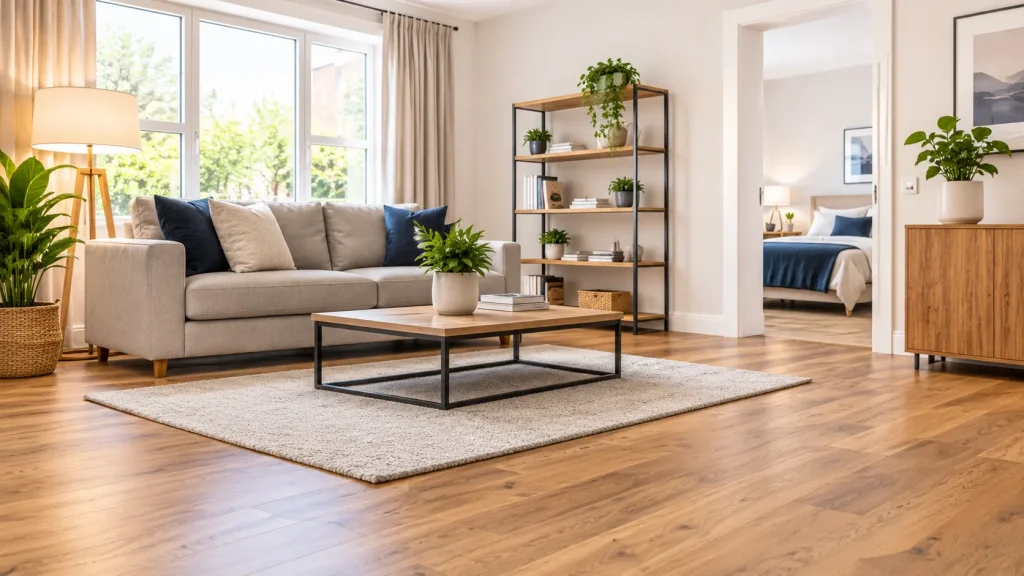
Choosing the best flooring for rentals is about finding a balance between durability, maintenance, appearance, and cost. Rental properties experience regular foot traffic, furniture movement, spills, and wear from different tenants. The right flooring can help landlords reduce maintenance expenses and keep a property attractive between tenancies.
Wood flooring and wood-effect flooring are popular choices for buy-to-let properties in the UK. They offer a clean appearance and can suit living rooms, hallways, bedrooms, and dining areas. Some options are also easier to maintain than traditional carpets.
The best flooring for a rental property depends on the room, the expected level of use, the property budget, and the flooring’s resistance to everyday damage. Landlords should consider the long-term cost of ownership rather than the initial purchase price alone.
This guide explains the best flooring options for rental properties, the differences between materials, and how landlords can choose durable flooring for buy-to-let homes.
What Is the Best Flooring for Rental Properties?
The best flooring for rental properties is flooring that withstands regular use, is easy to clean, offers good value, and can be maintained or replaced without excessive cost. Laminate, luxury vinyl flooring, engineered wood, and vinyl flooring are common options for landlords.
Rental properties need flooring that can handle changing occupants and everyday wear. A flooring material that works well in an owner-occupied home may not always be the most practical choice for a property with frequent tenant changes.
The main factors landlords should consider include:
- Durability: Flooring should withstand regular walking, furniture movement, and everyday household activity.
- Maintenance: Cleaning and maintenance should be straightforward.
- Cost: Installation and replacement costs should fit the rental property’s budget.
- Appearance: Neutral flooring can appeal to a wider range of prospective tenants.
- Moisture resistance: Kitchens and bathrooms require flooring suited to moisture exposure.
- Repairability: Individual boards or sections may be easier to replace than an entire floor.
- Lifespan: The flooring should offer reasonable service life under the expected usage conditions.
For many landlords, laminate and luxury vinyl flooring provide a practical combination of appearance, cost, and everyday usability. Engineered wood may suit properties where a more natural wood finish is preferred.
The best choice depends on the specific room and how the property is used.
Which Wood Flooring Is Best for Landlords?
Laminate flooring, engineered wood flooring, and luxury vinyl flooring are among the most practical flooring options for landlords. Each material offers different advantages in terms of cost, maintenance, durability, and appearance.
Laminate Flooring
Laminate flooring is a popular choice for rental properties because it offers a wood-look finish at a relatively accessible price point. Modern laminate products are available in a range of colours, textures, plank sizes, and finishes.
Laminate typically consists of several layers. These include a backing layer, a core, a decorative layer, and a protective wear layer.
Benefits of laminate flooring for landlords include:
- A wide choice of wood-effect designs.
- Easy everyday cleaning.
- Resistance to routine surface wear in suitable products.
- Quick installation with many click-lock systems.
- A cost-effective alternative to natural wood.
Standard laminate is not fully waterproof. Moisture can damage the core if water reaches exposed joints or edges. Landlords should select products with suitable moisture protection for the intended room and follow the manufacturer’s installation requirements.
Laminate is particularly suitable for living rooms, hallways, and bedrooms in rental properties.
Engineered Wood Flooring
Engineered wood flooring offers the appearance of real wood with a layered construction designed to improve dimensional stability. It generally consists of a real wood surface layer bonded to a multi-layer core.
Benefits include:
- A genuine wood appearance.
- A premium finish.
- A range of wood species and finishes.
- Suitable options for many residential interiors.
- Potential refinishing depending on the thickness of the wear layer.
Engineered wood can be a good choice for landlords managing higher-value properties or homes where appearance plays an important role in tenant appeal.
It usually costs more than laminate or basic vinyl flooring. It also requires appropriate care to protect the wood surface from moisture, scratches, and heavy impact.
Luxury Vinyl Flooring
Luxury vinyl flooring, commonly known as LVT, is designed to replicate materials such as wood and stone. It is available in plank and tile formats.
Many LVT products are water-resistant or waterproof, depending on the product construction and manufacturer’s specification.
Advantages include:
- Easy cleaning.
- Wood-effect designs.
- Suitable options for kitchens and busy areas.
- Resistance to everyday wear in suitable products.
- A range of installation methods.
LVT can be a practical choice for landlords who want wood-look flooring with moisture-related advantages over standard laminate.
Product specifications should be checked before installation. Waterproof claims may apply to the flooring surface rather than the entire installed floor system.
What Flooring Choices Do UK Homeowners Regret Most?
UK homeowners most often regret choosing on price alone, using the wrong floor for the room, skipping samples and ignoring maintenance. These four patterns cause most disappointment after fitting. Each one is avoidable.
- Choosing on price alone: A cheap floor can wear out in a few years. A longer-lasting floor often costs less per year of use.
- Wrong floor for the room: Solid wood swells when exposed to moisture in bathrooms. Thin laminate can sound hollow in a hallway.
- Skipping samples: Colour changes between daylight and evening light. Photos on a screen do not show grain or texture.
- Ignoring maintenance: Gloss finishes need frequent cleaning. Oiled wood needs periodic re-oiling.
Wood flooring in the UK is covered by the British Standard BS EN 14342. Ask suppliers whether their wood floors meet it.
Buyer Checklist
- Order two or three samples.
- Check each sample in morning and evening light.
- Match the floor type to the room’s moisture level.
- Confirm the underfloor heating limits.
- Ask how the floor is cleaned and refinished.
- Compare the cost per year, not just the cost per square metre.
What Is the Difference Between Laminate, Engineered Wood and LVT?
Laminate, engineered wood, and LVT differ in construction, appearance, maintenance, and their suitability for rental properties. Understanding these differences helps landlords select flooring that matches their budget and property requirements.
Feature | Laminate | Engineered Wood | Luxury Vinyl Flooring |
Appearance | Wood-effect | Real wood surface | Wood or stone effect |
Initial cost | Often budget to mid-range | Often mid-range to premium | Budget to premium, depending on product |
Water resistance | Product-dependent | Product-dependent | Often highly water-resistant or waterproof |
Cleaning | Easy routine cleaning | Requires suitable wood care | Generally easy |
Scratch resistance | Product-dependent | Finish-dependent | Wear-layer dependent |
Repair options | Individual boards may be replaceable | Individual boards may be replaceable | Product and installation dependent |
Installation | Often click-lock | Click-lock or other systems | Click-lock, glue-down or other systems |
Suitable rooms | Living rooms, bedrooms, hallways | Living rooms, bedrooms | Living rooms, kitchens, hallways and other suitable spaces |
Landlord suitability | Good for general living spaces | Good for premium rental properties | Good for high-use areas and moisture-prone spaces with suitable products |
The table provides a general comparison. Actual performance depends on product quality, installation, subfloor preparation, and maintenance.
Landlords should check the manufacturer’s technical information before selecting flooring for a particular room.
Why Is Laminate Flooring a Popular Choice for Rental Properties?
Laminate flooring is popular with landlords because it offers a wood-effect appearance, relatively simple maintenance, and a range of price points. It can provide an attractive floor without the cost of installing solid hardwood flooring.
Laminate flooring is particularly useful when landlords need to refurbish several rooms within a limited budget.
Cost-effective refurbishment
Laminate flooring is available at different price levels. This gives landlords the flexibility to select products based on the rental property’s value and refurbishment budget.
A suitable laminate floor can help create a consistent appearance throughout living areas and bedrooms.
Easy everyday cleaning
Most laminate surfaces can be maintained with regular sweeping, vacuuming using a suitable setting, and a lightly damp cleaning method approved by the manufacturer.
This makes laminate practical for households where occupants want straightforward cleaning routines.
Wood-effect appearance
Laminate flooring can replicate oak, walnut, ash, and other wood styles.
Neutral finishes can complement different furniture styles and interior colour schemes. This can make the property easier to present during viewings.
Suitable for high-use areas
Some laminate products are designed for residential areas with regular foot traffic.
Landlords should check the wear classification and product specifications rather than assume that every laminate product offers the same performance.
Faster refurbishment
Many laminate products use click-lock installation systems. These can make installation quicker when the subfloor is prepared correctly.
The overall installation time depends on room size, flooring condition, transitions, skirting details, and preparation requirements.
Is Waterproof Flooring Better for Rental Properties?
Water-resistant or waterproof flooring can be a practical choice for rental properties, particularly in kitchens, utility areas, and other spaces where spills are more likely. The correct specification depends on the room and the flooring product.
Landlords often need flooring that can handle everyday accidents without requiring immediate replacement.
Kitchens
Kitchens experience spills, food residue, frequent cleaning, and movement around cabinets and appliances.
Suitable vinyl flooring and certain water-resistant laminate products may be considered for kitchens. The flooring should be compatible with the installation environment and moisture exposure.
Hallways
Hallways experience regular foot traffic, outdoor dirt, footwear, and movement of bags or furniture.
Durable laminate or suitable LVT products can be practical options for hallways. Landlords should also consider entrance mats and regular cleaning.
Bathrooms
Bathrooms experience frequent moisture and water exposure.
Suitable vinyl flooring or other flooring specifically designed for bathroom conditions is generally preferable to standard laminate or engineered wood. Waterproofing of the floor system, edges, joints, and installation details matters.
Utility rooms
Utility rooms may experience spills, washing machine leaks, and moisture from appliances.
Flooring should be selected according to the expected exposure and the manufacturer’s recommendations.
Waterproof flooring does not eliminate the need for proper installation. Moisture can still affect subfloors, adhesives, joints, and surrounding materials.
What Is the Most Durable Flooring for Buy-to-Let Properties?
The most durable flooring for buy-to-let properties depends on the room, product specification, installation quality, and expected tenant use. Commercially rated or higher-performance residential products may be worth considering for areas with heavy foot traffic.
Durability should be assessed using the product’s technical specifications.
Wear layer and surface protection
Flooring products have different surface protection systems.
Laminate flooring uses a protective surface layer. LVT products often have a wear layer designed to protect the printed surface. Engineered wood flooring has a real wood wear layer and a finish.
The thickness and quality of these layers can influence how a product performs during everyday use.
Product classification
Manufacturers may provide product classifications, technical performance details, or usage recommendations.
Landlords should check whether the product is intended for the level of residential traffic expected in the rental property.
Scratch resistance
Furniture, footwear, pets, and moving objects can cause scratches.
Flooring with suitable surface protection can reduce the effects of everyday use. Felt pads under furniture and proper furniture movement can also help.
Installation quality
A durable floor can fail prematurely when installation is poor.
Subfloor preparation, expansion gaps, moisture testing, suitable underlay, and correct installation methods can all affect flooring performance.
Landlords should prioritise installation quality alongside material selection.
How Can Landlords Choose Tenant-Proof Flooring?
Tenant-proof flooring should be selected based on everyday household activity, cleaning requirements, room usage, and the possibility of future refurbishment. No flooring material is completely damage-proof.
The term tenant-proof flooring generally refers to flooring that can tolerate normal residential use and is relatively practical to maintain.
Landlords can use the following approach.
1. Identify the room
Different rooms require different flooring characteristics.
- Bedrooms may prioritise comfort, appearance, and noise reduction.
- Living rooms may prioritise durability and visual appeal.
- Hallways may require resistance to frequent foot traffic.
- Kitchens may require suitable moisture resistance.
- Bathrooms need flooring designed for wet conditions.
2. Set a refurbishment budget
Calculate the cost of flooring, underlay, installation, preparation, trims, waste, and removal of the existing floor.
A lower-priced product may not be the most cost-effective option if installation or maintenance costs are higher.
3. Select a suitable finish
Neutral wood-effect flooring can suit many rental interiors.
Light oak, natural oak, mid-tone wood, and neutral grey-brown finishes can work with different furniture and wall colours.
4. Check maintenance requirements
Landlords should choose flooring that tenants can maintain using straightforward cleaning methods.
Avoid selecting products with maintenance requirements that are difficult to explain or follow.
5. Check warranties and installation requirements
Review the manufacturer’s warranty conditions.
Some warranties require specific underlay, installation methods, moisture conditions, or cleaning products.
6. Consider replacement costs
Flooring should be assessed for repairability and replacement practicality.
Products that allow individual sections to be replaced may offer an advantage when damage is limited to a small area.
What Is the Best Flooring for Each Room in a Rental Property?
The best flooring for each room depends on the activity, moisture exposure, comfort requirements, and expected foot traffic. Landlords should avoid using one flooring material throughout the property without considering room-specific conditions.
Room | Recommended flooring options | Main consideration |
Living room | Laminate, engineered wood, LVT | Appearance and durability |
Bedroom | Laminate, engineered wood, carpet | Comfort and noise |
Hallway | Laminate, LVT | Foot traffic and dirt |
Kitchen | LVT, suitable vinyl, approved water-resistant laminate | Spills and moisture |
Bathroom | Suitable vinyl or bathroom-rated flooring | Water exposure |
Utility room | Suitable vinyl or moisture-resistant flooring system | Appliance leaks and spills |
Dining room | Laminate, engineered wood, LVT | Furniture movement and cleaning |
Living rooms
Living rooms need flooring that can withstand furniture movement and daily foot traffic.
Laminate, engineered wood, and LVT can provide a practical wood-look finish. Landlords should consider surface protection and ease of cleaning.
Bedrooms
Bedrooms may benefit from flooring that offers comfort and reduced noise.
Carpet remains a popular option for bedrooms. Laminate and engineered wood can also work well when paired with suitable rugs.
Hallways
Hallways are among the most frequently used areas in a property.
Durable laminate or LVT can be useful because these materials offer wood-effect finishes and straightforward cleaning.
Kitchens
Kitchens require flooring that can cope with spills and regular cleaning.
Suitable vinyl flooring and products specifically designed for moisture exposure are often practical choices.
Bathrooms
Bathrooms require flooring suitable for wet conditions.
Landlords should select a flooring system designed for bathroom use and pay attention to installation details around edges, pipes, and fixtures.
How Much Does Landlord Flooring Cost in the UK?
The cost of landlord flooring in the UK depends on the flooring material, product quality, room size, installation, subfloor preparation, and additional materials. Flooring prices can vary significantly between suppliers and regions.
Landlords should compare the total installed cost rather than the price per square metre alone.
Typical cost components include:
- Flooring material.
- Underlay where required.
- Installation labour.
- Subfloor preparation.
- Floor levelling.
- Removal and disposal of old flooring.
- Skirting boards and trims.
- Door adjustments.
- Waste allowance.
What affects flooring costs?
Material choice: Laminate, LVT, engineered wood, and vinyl have different price ranges.
Room size: Larger areas require more material and may increase labour costs.
Subfloor condition: Uneven or damaged subfloors may require additional preparation.
Installation method: Click-lock, glue-down, and other installation systems may have different labour requirements.
Property layout: Irregular rooms, multiple doorways, and transitions can increase installation complexity.
Flooring removal: Existing carpet, laminate, tiles, or adhesive may need to be removed before installation.
For a rental refurbishment, landlords should obtain a detailed quotation that includes materials, installation, preparation, and finishing.
How Can Landlords Reduce Flooring Maintenance Costs?
Landlords can reduce flooring maintenance costs by selecting suitable materials, maintaining floors regularly, protecting high-use areas, and addressing damage early. Preventive maintenance can help extend the useful life of flooring.
Use entrance mats
Entrance mats can help reduce dirt, moisture, and debris entering the property.
They can also reduce the amount of cleaning required in hallways.
Add furniture protection
Felt pads or suitable furniture protectors can reduce scratching from chairs, tables, and other furniture.
Heavy furniture should be moved carefully to avoid damaging flooring surfaces.
Follow manufacturer cleaning instructions
Different flooring materials require different cleaning methods.
Excessive water, unsuitable detergents, abrasive cleaning tools, and incorrect maintenance products can damage flooring.
Address spills promptly
Spills should be cleaned according to the manufacturer’s guidance.
Prompt cleaning can help prevent stains and moisture-related damage.
Inspect flooring between tenancies
Landlords should inspect floors during property handovers and refurbishment periods.
Inspection can help identify damaged boards, loose transitions, moisture problems, and surface wear before these issues become more serious.
Keep spare flooring
Keeping a small quantity of the installed flooring can help with future repairs.
Spare boards or tiles may be useful if the product is discontinued or if damage occurs in a specific area.
Should Landlords Choose Carpet or Wood Flooring for Rental Properties?
Landlords can choose carpet or wood-effect flooring depending on the room, tenant expectations, budget, and maintenance requirements. Wood-look flooring is often practical in living spaces and hallways, while carpet can provide comfort in bedrooms.
Factor | Carpet | Wood-effect flooring |
Comfort | Soft underfoot | Hard surface |
Cleaning | Vacuuming and occasional deep cleaning | Sweeping and suitable damp cleaning |
Spills | May absorb liquids | Surface-dependent |
Appearance | Soft, warm finish | Wood-style appearance |
Replacement | May require replacement after stains or wear | Individual boards or sections may be repairable |
Bedroom suitability | Often suitable | Suitable with rugs where desired |
Hallway suitability | Depends on carpet durability | Often practical |
Carpet may suit bedrooms where warmth and comfort are priorities.
Wood-effect flooring may suit hallways, living rooms, and kitchens where easier surface cleaning is preferred.
Some landlords use a combination of carpet and wood-effect flooring to meet the needs of different rooms.
How Long Does Flooring Last in a Rental Property?
The lifespan of flooring in a rental property depends on the material, product quality, installation, maintenance, room usage, and occupant behaviour. Flooring does not have a fixed lifespan that applies to every property.
Laminate, LVT, engineered wood, and carpet can all experience different levels of wear under residential conditions.
Factors that influence flooring lifespan include:
- Foot traffic.
- Furniture movement.
- Moisture exposure.
- Cleaning methods.
- Product specification.
- Subfloor condition.
- Installation quality.
- Pets.
- Damage and maintenance.
Landlords should assess the condition of flooring during routine inspections and tenancy changes.
Replacement may be necessary when flooring becomes damaged, unsafe, excessively worn, difficult to maintain, or unsuitable for the property’s condition.
The manufacturer’s warranty should not be treated as a guaranteed service-life estimate. Warranty coverage and actual performance can differ.
Where Can Landlords Buy Durable Flooring for Rental Properties in the UK?
Landlords can purchase laminate, engineered wood, and vinyl flooring from flooring retailers, specialist suppliers, and trade flooring suppliers in the UK. Trade suppliers may offer product ranges suitable for refurbishment projects, rental properties, and larger flooring requirements.
When purchasing flooring for a rental property, landlords should compare:
- Product specifications.
- Price per square metre.
- Wear and durability ratings.
- Moisture resistance.
- Installation requirements.
- Warranty terms.
- Stock availability.
- Delivery costs.
- Suitable trims and accessories.
Trade Flooring UK offers flooring options for residential and commercial flooring projects. Landlords can browse flooring products and compare styles and specifications for their refurbishment requirements.
Choosing a flooring supplier that provides clear product information can help landlords make better decisions before installation.
Choose Flooring That Works for Your Rental Property
Selecting the best flooring for rentals requires more than choosing a design. Landlords need materials that suit the room, fit the refurbishment budget, and offer practical maintenance over time.
Laminate flooring can be a cost-effective option for living rooms and bedrooms. LVT can offer moisture-related advantages in suitable areas. Engineered wood can provide a premium appearance for properties where interior finish matters.
The right flooring choice can help landlords maintain the appearance and usability of their properties between tenancies.
Looking for durable flooring for your rental property? Browse the flooring options at Trade Flooring UK and choose a floor that fits your property, budget, and refurbishment requirements.
Frequently Asked Questions
Laminate flooring and luxury vinyl flooring are practical choices for many rental properties. They offer wood-effect designs, straightforward cleaning, and a range of price points. The best option depends on the room and the property’s requirements.
Budget laminate and vinyl flooring can offer affordable options for rental properties. Landlords should compare the total installed cost, product specification, and maintenance requirements before making a decision.
Yes. Laminate flooring can be a practical option for living rooms, bedrooms, and hallways. It offers a wood-effect finish and easy everyday cleaning. Standard laminate should not be exposed to excessive moisture.
LVT can be a better option in areas where moisture resistance is a priority. Laminate may offer better value in dry living spaces, depending on the product. Both materials vary in quality and performance.
Sources
For additional guidance on rental property maintenance, flooring suitability and landlord responsibilities in the UK, refer to the following resources:
- GOV.UK – Renting Out a Property: Making Repairs
- GOV.UK – Private Renting: Repairs
- Contract Flooring Association – Guide to Contract Flooring
- GOV.UK – Understanding and Addressing the Health Risks of Damp and Mould in the Home
These resources provide further information on property maintenance, flooring considerations and rental housing responsibilities. Always refer to individual flooring manufacturers’ specifications for installation, maintenance and product suitability.