
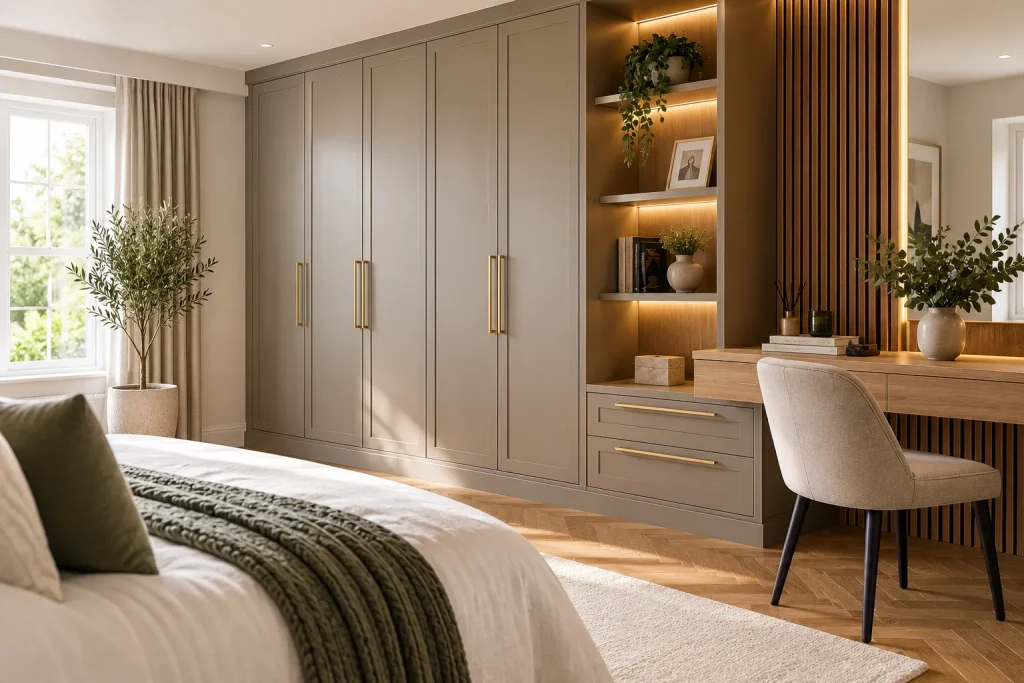
Bespoke furniture in the UK typically costs between £800 and £15,000 per piece in 2026, depending on size, material, and design complexity. A fitted wardrobe or bespoke kitchen sits at the higher end, while a single custom piece like a coffee table or sideboard falls near the lower end. These are indicative market ranges rather than fixed prices, since every bespoke project uses different materials, dimensions, and joinery methods.
Quick answer: Bespoke furniture in the UK generally ranges from a few hundred pounds for a small custom piece to £10,000 or more for a large fitted installation such as a kitchen. The final price depends mainly on size, material, design complexity, finish, hardware, and whether delivery includes on-site installation.
This guide breaks down typical 2026 pricing by room, material, and project type, explains what a proper quote should include, and shows how to compare quotes from different bespoke furniture makers.
A note on these figures: the price ranges in this guide are general UK market indicators, drawn from typical joinery and cabinet-making rates rather than a single published survey. They’re a starting point for budgeting, not a quote. Always confirm exact pricing with a supplier’s written quote before committing to a project.
What Does Bespoke Furniture Cost on Average in the UK?
The average bespoke furniture project in the UK costs somewhere between £1,200 and £6,000 in 2026, based on typical market rates for common requests. This range covers fitted wardrobes, bookshelves, media units, and dining tables. Small accent pieces like side tables or shelving units often start around £300. Large fitted installations, such as whole-room storage or bespoke kitchens, can exceed £10,000.
Labour is usually the largest part of the bill, commonly making up 40% to 60% of the total cost. Materials, hardware, and finishing account for the remainder. The standard UK VAT rate is 20%, although how VAT applies to a specific furniture or joinery project can vary depending on what’s being supplied, so it’s worth confirming with your supplier whether a quote is inclusive or exclusive of VAT.
Regional pricing also plays a role. Carpenters and joiners in London and the South East often charge more than those in the North of England or Wales, reflecting higher workshop and labour costs in those areas.
These figures are general market indicators, not a substitute for a written quote. Getting two or three quotes from local bespoke furniture makers remains the most reliable way to confirm current pricing for a specific project, since timber and hardware costs can shift during the year.
What Should a Bespoke Furniture Quote Include?
A proper bespoke furniture quote should cover ten distinct items, not just a single headline price. Comparing quotes that leave out any of these makes it hard to judge which supplier is offering better value.
- Design consultation and initial sketches
- Site survey and measurements
- Technical drawings or 3D visuals
- Material specification, including timber type and thickness
- Hardware, such as hinges, runners, and handles
- Finish type, for example paint, oil, lacquer, or veneer
- Manufacturing time and workshop process
- Delivery method
- On-site installation
- VAT and payment terms
A supplier who lists these items separately is generally easier to trust than one who provides a single lump-sum figure with no breakdown. This level of detail also makes it clear where the money goes if two quotes for the same room come back at different prices.
How to Compare Bespoke Furniture Quotes
Comparing bespoke furniture quotes on price alone often leads to a poor decision, since two quotes for the same room can use very different specifications. Look past the total figure and check the details behind it first.
- Material specification and board or timber thickness
- Hardware brand and quality, such as soft-close hinges
- Finish type and number of coats
- Internal fittings, like drawers, dividers, or shelving
- Whether installation is included or charged separately
- Warranty or guarantee period
- Delivery timeframe
- Number of design revisions included
- Whether VAT is included in the headline price
- Aftercare or snagging support once the piece is installed
A lower quote that excludes installation, hardware upgrades, or VAT can end up costing more once those items are added back in. Asking each supplier for the same breakdown makes the comparison genuinely fair.
How Much Does Bespoke Furniture Cost by Room in the UK?
Bespoke furniture costs differ significantly by room, with typical 2026 ranges running from around £500 for a small hallway unit to £12,000 for a full fitted kitchen. The table below shows indicative price ranges for common rooms across the UK; actual costs depend on the specification agreed with your supplier.
Room | Typical Bespoke Furniture | Indicative Price Range (2026) |
Bedroom | Fitted wardrobe | £1,500 – £6,000 |
Living room | Media unit or bookshelf | £800 – £4,000 |
Kitchen | Fitted units and cabinetry | £4,000 – £12,000 |
Home office | Built-in desk and shelving | £1,000 – £3,500 |
Hallway | Storage bench or console | £500 – £1,800 |
Dining room | Table and matching seating | £1,200 – £5,000 |
Kitchens carry the highest cost because they combine carpentry, worktops, and fitted hardware such as soft-close hinges and drawer runners. Hallway pieces tend to be the most affordable, since they’re usually a single freestanding or wall-mounted unit rather than a full fitted installation.
How Much Does Bespoke Furniture Cost by Material?
Material choice has one of the biggest effects on bespoke furniture pricing, with solid hardwoods sitting well above engineered boards. Solid oak and walnut generally sit at the top of the price scale, while painted MDF sits at the bottom.
Oak and walnut cost more per piece than MDF for an equivalent design, due to higher raw timber costs and the extra skill needed to work solid hardwood. Walnut is often priced above oak in the UK because of lower domestic timber supply. Birch plywood sits in the middle, offering good durability and stability at a lower cost than solid hardwood.
- Solid oak or walnut: premium pricing, high durability
- Ash or beech: mid-to-high pricing, strong grain pattern
- Birch plywood: mid-range pricing, stable and lightweight
- Painted MDF: budget-friendly pricing, smooth finish
Many UK furniture makers use a hardwood frame with an engineered board interior for larger pieces like wardrobes. This keeps the visible surfaces solid while helping to control the overall material cost. Ask your supplier for exact per-piece pricing based on your chosen timber, since raw material costs can change through the year.
How Long Does Bespoke Furniture Take to Make in the UK?
Bespoke furniture typically takes 4 to 12 weeks to make in the UK, from initial design sign-off to final installation, though this varies by supplier and project size. Simple pieces such as a shelving unit can sometimes be ready in 2 to 3 weeks. Complex fitted installations, such as a bespoke kitchen, often take 10 to 14 weeks once the design and materials are confirmed.
Lead time depends on workshop capacity, timber availability, and the number of custom components involved. Busy periods before Christmas and in early spring can extend lead times, since demand for home renovation work tends to rise during those months.
Booking a survey and design consultation early is the best way to plan around a realistic lead time, particularly for kitchens and fitted wardrobes where cabinet-making happens off-site before installation.
Is Bespoke Furniture Worth the Cost Compared to Off-the-Shelf?
Bespoke furniture generally costs more than comparable off-the-shelf furniture, but it offers exact-fit sizing and material choice that flat-pack ranges can’t match. Off-the-shelf wardrobes and cabinets come in fixed sizes, which often leaves gaps in awkward rooms or under sloped ceilings.
Bespoke pieces are built to the exact measurements of a room, which makes better use of available space. They also tend to last longer, since solid materials and traditional joinery generally hold up better over time than particleboard flat-pack furniture.
Off-the-shelf furniture remains the better choice for standard-sized rooms on a tighter budget, or for anyone who needs furniture within a week rather than a few months.
When planning a bespoke furniture project alongside a wider room renovation, flooring and furniture decisions work best when made together. Request a bespoke furniture and joinery consultation with Trade Flooring UK to have timber tones, finishes, and installation timelines planned across the whole room from a single site visit.
How Trade Flooring UK Approaches Bespoke Furniture and Joinery Projects
Trade Flooring UK treats bespoke furniture and joinery as part of a wider room plan, not an item priced in isolation. This is the main difference between working with a joined-up supplier and pricing furniture and flooring separately through two unrelated companies.
A typical Trade Flooring UK bespoke project follows five stages:
- Consultation and site survey — measurements are taken on-site, alongside a review of the existing or planned flooring, so furniture dimensions and flooring transitions are agreed together from the start.
- Material and finish selection — timber species, board type, and finish are chosen with the flooring colour and grain already in mind, rather than matched afterward.
- Design sign-off — drawings and a written specification are confirmed before manufacturing begins, covering every item in the quote checklist above.
- Manufacturing — pieces are built off-site to the confirmed specification.
- Coordinated installation — furniture and flooring installation are sequenced together where both are being fitted, reducing the risk of damage to a newly fitted floor from furniture installation work.
Example project approach: for a fitted bedroom wardrobe alongside new engineered oak flooring, the wardrobe’s plinth height, timber tone, and hardware finish would be agreed at the same site visit as the flooring order, so both are fitted to match rather than adjusted after the fact.
This coordinated approach is what separates Trade Flooring UK from a generic furniture-only website: the advice on this page reflects how flooring and bespoke furniture decisions actually interact on a real project, not just general joinery pricing.
Frequently Asked Questions
A bespoke fitted wardrobe in the UK typically costs between £1,500 and £6,000 in 2026, depending on size, material, and internal storage features like drawers and hanging rails.
Bespoke furniture is not usually cheaper than IKEA on a like-for-like basis. IKEA furniture is mass-produced, which generally keeps unit costs lower than custom-made pieces built to individual room measurements.
Painted MDF is typically the cheapest common material for bespoke furniture in the UK, offering a smooth finish at a lower cost than solid hardwoods like oak or walnut.
Many UK bespoke furniture makers ask for a deposit of around 30% to 50% before starting work, with the balance due on delivery or installation. Deposit terms vary by supplier.