
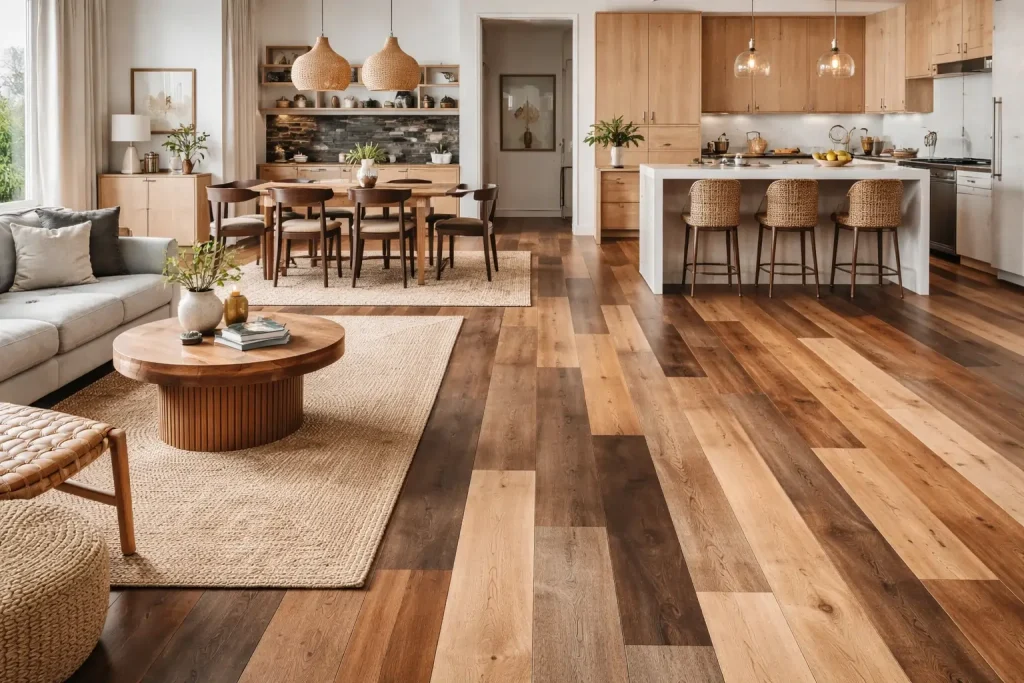
Why are modern interiors moving away from single-tone floors? And how are designers creating spaces that feel warmer and more visually refined without overwhelming the eye? Mixing wood flooring tones has emerged as a defining design strategy, allowing homes to achieve layered compositions that feel premium, balanced and intentionally styled. The hesitation around combining wood floors usually stems from the fear of visual clash. But do great interiors depend on perfect matching or on controlled contrast? With a clear understanding of undertones, proportion and spatial flow, wood tone mixing works like building a colour palette. Each tone carries its own depth and psychological influence, turning wood flooring tones into a design asset that helps homeowners combine wood floors with confidence and long-term style, showing exactly how to combine wood flooring tones for a balanced and stylish home.
Why Mixing Wood Flooring Tones Works in Modern Interiors
Modern interior design has changed beyond rigid uniformity toward expressive spaces. Mixing wood tones adds depth, visual layering and a sense of quiet luxury, allowing interiors to feel more personal and architecturally composed rather than flat or repetitive. Lighting significantly influences how wood tones interact. Warm light of interior designing with wood enriches oak and honey finishes, while cooler lighting sharpens greys and darker woods. Thoughtful mixing of wood tones also defines open-plan zones without physical dividers, creating natural flow and structure across living spaces.
Understand Wood Undertones Before You Start
Every wood tone carries an undertone that determines how it pairs with others. Oak, maple and beech typically sit in the warm range, walnut and darker stains lean cool, while ash and light engineered finishes remain neutral. Designers often use an Undertone Mapping Technique, charting floors, furniture and finishes before final selection. This awareness is essential for creating cohesive wood flooring in London homes, making it easier to combine wood floors with confidence and avoid visual conflict.
Choose One Dominant Wood Tone as the Anchor
Successful mixing wood tone begins with a clear anchor. The largest surface, typically the flooring, should establish the dominant tone to create consistency and prevent visual fragmentation. Lighter anchors expand smaller rooms and enhance daylight, while deeper tones ground larger spaces and add sophistication. Room size, ceiling height and natural light should guide this choice. Many homeowners working with the best engineered wood flooring company London select the anchor tone first, then build complementary wood flooring combinations around it.
Balancing Light and Dark Wood Tones
Contrast is essential when mixing wood flooring tones. Too much similarity feels flat, while excessive contrast appears chaotic. Designers often apply the 30–60–10 rule, using a dominant mid-tone, a supporting darker tone and a lighter accent. Dark floors pair best with lighter furniture, while light floors benefit from deeper cabinetry or accents. This balance helps each tone stand out without competing and makes it easier to combine wood floors seamlessly.
Grain Pattern Harmony: The Detail Designers Prioritise
Colour alone does not define harmony. In mixing wood tones, the grain pattern plays an equally important role. Straight, subtle grains feel calm and modern, while bold cathedral grains add visual weight. A common design approach is pairing simple-grain flooring with more expressive furniture or vice versa, to create contrast without overwhelming the space. Thoughtful grain pairing is a key element in refined wood flooring combinations.
Use Flooring Transitions to Make Mixing Tones Look Intentional
Flooring transitions play a critical role when you combine wood floors with different finishes. Elements such as brass trims, dark walnut borders, or angled herringbone connectors act as visual buffers between contrasting wood flooring tones, preventing abrupt or accidental clashes. When planned thoughtfully, transitions guide the eye, improve spatial flow, and clearly signal intentional design, ensuring mixed wood floors feel cohesive and well resolved.
How to Mix Wood Floors Across Different Rooms
Homes can either maintain one consistent tone or use varied tones strategically. When mixing, structure is essential. Lighter tones suit entryways, medium tones work best in living and dining areas, and richer tones add depth to private or low-light spaces. In multi-level homes, tones should progress logically so each floor feels connected without repetition. This approach simplifies mixing wood tones across the entire property.
Using Furniture, Decor and Wall Colours to Tie Wood Tones Together
Furniture, rugs and soft furnishings help blend different wood flooring tones. Neutral wall colours like greige, taupe or mushroom unify varied finishes, while black or dark metal accents ground the mix and add structure. Many high-end wood flooring in London interiors rely on these elements to create cohesion. This is a core principle of interior design with wood.
Common Mistakes to Avoid When Mixing Wood Tones
Overmixing too many tones is the most common error. Ignoring undertones creates visual tension, even when colours appear similar. Another mistake is using “tone twins,” shades that are almost identical but clash because the difference feels unintentional. Deliberate contrast and thoughtful selection are essential when mixing wood tones and learning how to combine wood floors effectively.
Frequently Asked Questions
- Can you mix light and dark wood floors in the same home?
Yes, when undertones are compatible and transitions are planned properly. - How many wood tones can you safely mix?
Two to three tones work best for balance and clarity. - Should furniture match the floor exactly?
No. Complementary contrast creates a more natural and designed look. - What wood flooring tones work best for creating warmth?
Warm oak, honey and mid-tones add the most inviting feel. - How do lighting and wall colours affect wood tone harmony?
Lighting changes how tones appear, while neutral walls help unify mixed finishes.
Conclusion
Combining wood flooring tones allows homes to feel layered, intentional and visually refined. The key lies in understanding undertones, choosing a strong anchor tone, maintaining balance and planning transitions carefully. Always review samples under both natural and artificial light before final decisions. Whether designing a single room or an entire property, thoughtful mixing of wood tones enhances aesthetics and long-term satisfaction.For homeowners seeking premium results, working with the best engineered wood flooring company London ensures expert guidance, durable materials, and versatile design outcomes. Contact Trade flooring to upgrade your interiors.